You want to become an IAS officer, which is brave, ambitious, and just a little suspicious if you say it with full confidence at 19. The real problem is not the exam structure itself; it’s the way people turn it into mythology, as if the syllabus lives on a mountain and only appears to those who suffer enough. In 2026, the path is still the same three-stage UPSC Civil Services process: Prelims, Mains, and Interview. UPSC’s 2026 calendar places Prelims on 24 May 2026 and Mains from 21 August 2026, so this is not a vague dream anymore; it’s a date on the calendar.
The thing nobody actually says out loud
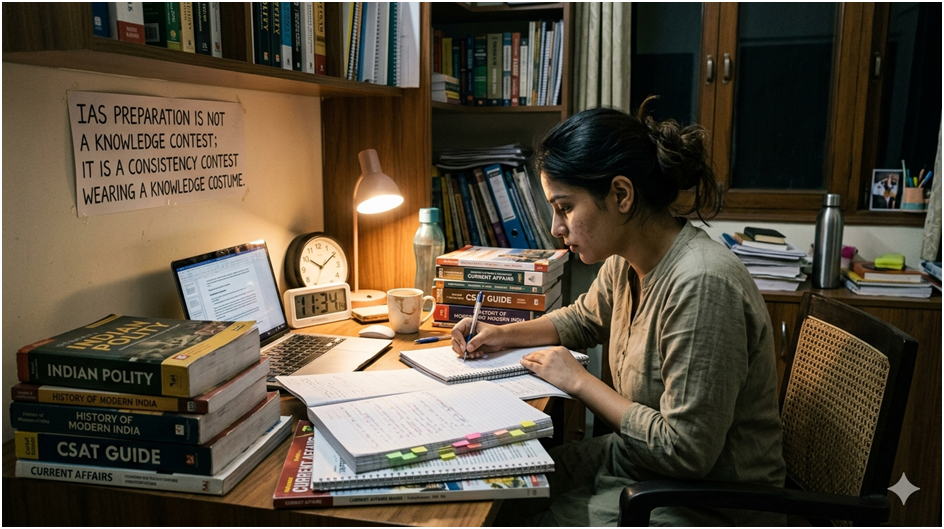
Most people who say they want IAS do not want the exam. They want the identity, the respect, the certainty, and the “my relatives will finally stop asking what I do all day” energy. That is fine, by the way. But the exam punishes vanity very quickly, because UPSC does not care how motivated you look in a reel or how many notebooks you bought after a late-night study breakdown. The first uncomfortable truth is this: IAS preparation is not a knowledge contest; it is a consistency contest wearing a knowledge costume. Prelims checks range and speed, mains checks structure and depth, and the interview checks whether your brain can hold itself together under pressure. If you are waiting to feel “ready,” you will waste months polishing the fantasy. The people who make progress are usually the ones who accept the ugly part early: you begin before you feel settled.
Many students also imagine the IAS path as one dramatic life decision. It is more practical than that. You need an eligible degree, and you must be at least 21 years old. For the general category, the upper age limit is 32 years, with relaxations for reserved categories. That means a 21-year-old and a 25-year-old are both still in the game, which is why panic is a terrible strategy, and so is comparing your Chapter 1 with someone else’s Chapter 17.
How this actually works: the real mechanics
The UPSC Civil Services Examination has three stages, and each stage tests a different version of you. Prelims is the filter. Mains is the real sorting machine. The interview is the final human check, where you are not expected to sound robotic, but you are also not allowed to sound like you learned civics from social media comments.
Here is the part most generic articles skip: the exam is not built around “studying everything.” It is built around controlling loss. In Prelims, you are managing wrong answers, time pressure, and overconfidence. In Mains, you are managing how clearly you can think on paper. In the interview, you are managing tone, honesty, and balance. That is why people who only memorize facts often freeze later. Facts are necessary. There are not enough.
A few mechanics matter more than people admit:
- Eligibility comes first. You need a recognized graduation degree, or you can apply in the final year in many cases, but the safest position is to know your exact status before the notification closes.
- Prelims is not your rank. It is a gateway. That is why chasing “topper-style” perfection in Prelims can be a trap. You just need to clear it cleanly.
- CSAT still matters. People call it qualifying and then treat it like a side dish. That is how they get surprised on exam day, which is a very expensive way to learn humility.
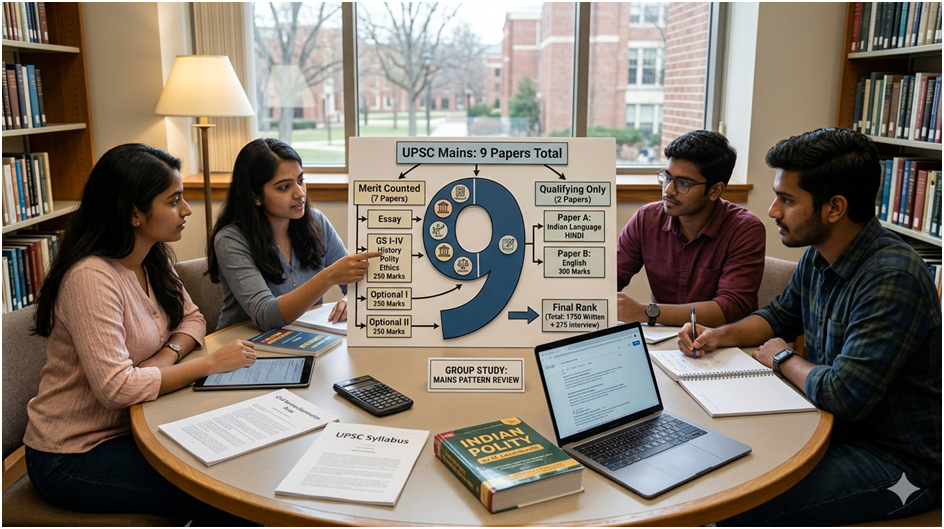
- Mains is where serious prep shows. The written exam has 9 papers, including 2 qualifying language papers, 4 general studies papers, an essay, and 2 optional papers.
- Optional subject choice is not decorative. It contributes 500 marks through two papers, so choosing it casually is like choosing your entire semester project by coin toss.
- An interview is not a quiz show. It carries 275 marks and tests judgment, not your ability to recite headlines like a nervous anchor.
The niche angle people ignore is timing discipline. A 19-year-old and a 24-year-old should not prepare the same way. The younger aspirant usually needs foundation building and language clarity; the older aspirant often needs exam discipline and faster revision cycles. That distinction matters more than motivational slogans. If you are 18 to 25, your advantage is time, but time only helps if you stop wasting it on “one more video” and start building a repeatable routine.
Comparison of what’s actually different
| Option | What it actually does | Who it’s for | The catch |
| Prelims-first approach | Useful, but it can create shallow preparation if you never connect it to the mains. | Beginners who need an entry point and fast momentum. | Useful, but it can create shallow preparation if you never connect it to Mains. |
| Mains-first foundation approach | A bad option can quietly ruin months of effort, which is very on-brand for UPSC. | Serious long-term aspirants and graduates with enough runway. | Slower early progress, which can feel unproductive if you want instant feedback. |
| Optional-led strategy | Students with a strong graduation subject or a genuine interest. | Students with a strong graduation subject or genuine interest. | Uses one subject to build scoring strength across 500 marks. |
My recommendation is simple: start with Prelims awareness, build mains-level understanding, and choose your optional with cold honesty. Do not obsess over “the best strategy” like there is one magical notebook that unlocks the republic.
What actually happens when you try this
The first thing that surprises most aspirants is how ordinary the process feels once it begins. No dramatic transformation happens on Day 1. You open the syllabus, realize it is broad, and then begin dividing it into manageable parts like a person trying to organize a pantry during a minor crisis.
What usually happens in real life is this: your first month feels productive, your second month exposes gaps, and your third month teaches you whether your routine is real or just ambition with good lighting. Most people do not fail because they are incapable. They fail because they keep restarting. That pattern is everywhere, and it is boringly consistent.
You also discover that “studying all day” is not the same as preparing well. A student who reads policy for two hours and writes ten short answers usually moves faster than someone who consumes ten hours of random content and remembers almost none of it. The exam rewards structure. It does not reward emotional suffering, despite what some coaching thumbnails imply.
One thing nobody warns beginners about is how much the syllabus changes your self-image. You start noticing whether you can explain a newspaper article in plain language, whether your notes actually make sense a week later, and whether you can sit still long enough to finish a paper without panic. That is annoying. It is also useful.
The advice everyone gives vs what works
People love saying, “Study 10 to 12 hours daily.” That advice sounds impressive and often means very little. If those hours are distracted, half-asleep, and broken by social media, they are just long hours with a better PR team. What works better is a realistic daily block you can repeat for months without collapse.
Another common line is, “Read every newspaper cover to cover.” That is how people create fake seriousness. You do need current affairs, but you need them filtered through the syllabus, not absorbed like a sponge in a news studio. Read for themes, link events to policy, economy, governance, environment, and ethics, then stop pretending quantity is a virtue by itself.
A third favorite is, “Only toppers matter.” Toppers are useful for direction, but copying them blindly is a mistake. Their routines are usually built for their strengths, their timelines, and their optional subjects. Your job is to build a system that survives your own attention span, not someone else’s highlight reel.
People also say, “Choose your option based on scoring trend.” That can help a little, but it is not the whole decision. A subject you can actually read for six months without hating your existence is usually a better choice than a supposedly high-scoring subject you abandon by October. UPSC is long enough to punish fake enthusiasm.
The practical part what to actually do
Start with the official basics. Check the 2026 notification details, date window, and eligibility before building a fantasy timetable around the wrong exam cycle. If you are still in college, note your graduation timeline and your age bracket now, not later.
Pick one standard source for each major subject and stop shopping for the perfect book list. For prelims and mains, the issue is rarely a lack of material; it is too much material. One book that you finish beats five that you annotate and never return to.
Make a monthly plan, not a heroic one-week fantasy. Split your study into daily reading, answer writing, and revision, because Mains punishes people who only consume content. A weekly self-test matters more than a motivational post.
Choose options after serious thought, not after a Telegram poll. Look at your graduation background, interest, access to material, and comfort with writing. The subject should feel workable on bad days, because bad days are not exceptions in UPSC prep; they are part of the package.
Build a current affairs notebook by theme, not by date. That makes revision much easier when a question links economy, governance, and social policy in one go. Random clipping collection looks organized until you try revising it.
Practice writing answers early. Even short answers train you to think in structure, and structure is what the Mains rewards. Many students wait too long because they want “more syllabus first,” which is a neat excuse and a weak plan.
Take full-length mock tests only after some base work. Tests without preparation just teach anxiety. Tests with analysis teach improvement, which is the entire point unless your goal is to collect answer sheets like souvenirs.
Questions people actually ask
Can a 21-year-old start IAS preparation in 2026?
Yes, and that is actually a normal age to begin. The minimum age for the exam is 21 years, and you also need the right educational status. Starting early helps because UPSC rewards long preparation cycles more than dramatic last-minute bursts.
How many attempts do I get in UPSC?
That depends on category, so you should check your exact eligibility carefully before planning attempts. The important point is not the number alone; it is whether you are using each attempt properly. A careless attempt is just an expensive practice run.
Is graduation enough to apply for IAS?
Yes, a recognized graduation degree is the basic educational requirement, and final-year students may also be eligible in many cases. But you should not leave this to assumptions. Eligibility errors are the kind of problem that feels small until the form closes.
Is the UPSC optional really that important?
Very important. The optional carries 500 marks through two papers in Mains, which means it can shape your final score in a serious way. Pick it like you expect to live with it for a long time, because you probably will.
How hard is UPSC Prelims compared to Mains?
Prelims is harder for speed and elimination, while Mains is harder for depth and structure. They punish different weaknesses, which is why some candidates do well in one and struggle in the other. The exam is not one single monster; it is three different problems wearing the same badge.
How many papers are there in UPSC Mains?
There are 9 papers in the written stage, including 2 qualifying language papers, an essay, 4 general studies papers, and 2 optional papers. People often say “9 papers” casually, but the important detail is that not all of them count the same way.
Is coaching necessary for IAS?
No, not necessary, but it can help if it gives you structure. The catch is that coaching cannot do your reading, your revision, or your answer writing. It is a support system, not a substitute for the actual work.
How much time does IAS preparation take?
For most people, serious preparation takes many months and often a few cycles of revision and testing. There is no honest shortcut to this. The exam is designed to reward sustained effort, not sudden inspiration.
What should I do first if I want IAS in 2026?
First, confirm eligibility and understand the current cycle dates from the official UPSC notification. Then choose your optional direction, set a subject-wise routine, and start answering writing early. The first week should build a system, not a mood.
So where does this leave you
It leaves you with a plain truth: becoming an IAS officer is possible, but it is not glamorous in the way people pretend it is. It is mostly repetition, revision, and the discipline to keep showing up when the novelty dies. That sounds unromantic because it is.
The good news is that you do not need to become a different person overnight. You need a calendar, a syllabus map, one optional subject, and a routine that you can actually keep. If you are serious, do one concrete thing today: write down your eligibility, the 2026 exam dates, and the three subjects you will start this week.
That is the work. Not the fantasy version. The actual one.
Conclusion
You made it through the whole thing, which already puts you ahead of people who only collect UPSC opinions like trading cards. The exam is messy, demanding, and deeply uncinematic, which is probably why it filters people so well.
If you remember only one thing, make it this: the IAS path is won by people who can keep going after the excitement has left the room. That is less inspiring than a montage, but a lot more useful.
EDITOR NOTE: This article should link internally to articles about UPSC eligibility and age limit, UPSC optional subject selection, and UPSC study plan for beginners.