You clear 12th science, and suddenly everyone becomes a career expert. Uncle has one opinion. Cousin has another. Your coaching center has a third, usually expensive one. And somehow you are the one expected to know your entire future by Tuesday.
For Indian students in the 18 to 25 age bracket, the real issue is not a lack of options. There are too many options, too much noise, and very little honest guidance. Some careers are still solid. Some look shiny but need a lot of patience. Some pay well early. Some pay well later, after you survive the part where nobody claps for you.
This guide keeps it practical. Not dreamy. Not fake hype. Just the kind of careers after 12th science that actually have salary, scope, and a real path forward in 2026.
The thing nobody actually says out loud
The biggest lie in career advice is that every good career needs to be “passionate.” No. A career needs to fit your marks, budget, patience, and willingness to keep learning when the syllabus stops pretending to care about your feelings.
After 12th science, most students are pushed into the same two roads: engineering or medicine. Those are strong paths, yes. But they are not the only paths, and they are definitely not the right paths for everyone. India’s higher-education market in 2026 is big, messy, and full of careers that reward skill faster than reputation.
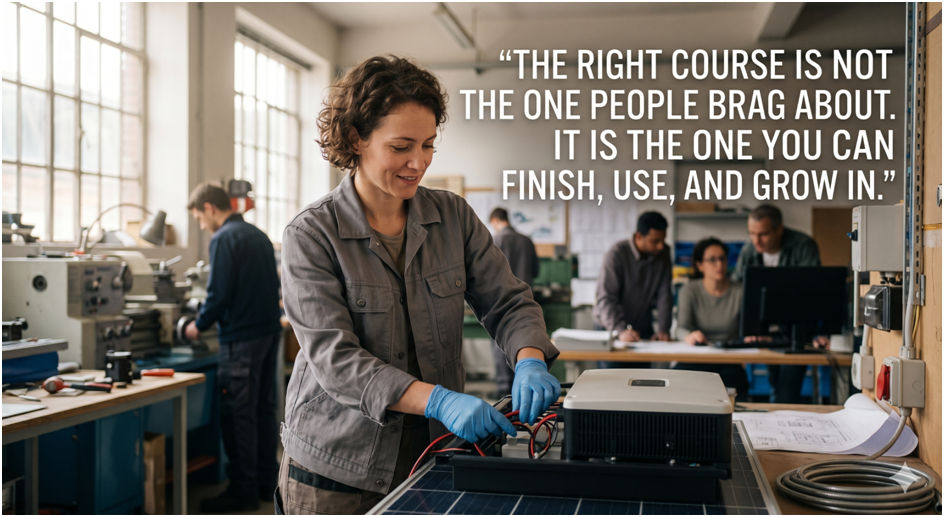
The right course is not the one people brag about. It is the one you can finish, use, and grow in. That sounds boring because it is. Boring is useful when the alternative is spending four years in a degree you hate and then acting surprised that life did not reward the suffering.
A lot of students also confuse “salary” with “scope.” They are not the same thing. Salary is what you can earn now or soon. Scope is what the field can become if you stay in it, move up, and keep your skills current. A career like MBBS may start slower and then scale hard later, while a field like B.Tech in CSE can pay early if you build the right skills. That difference matters more than the loudest college brochure in the room.
Also, yes, your relatives will still recommend the course they understood in 2008.
The real world now rewards students who can connect science with actual jobs: coding, health, data, design, agriculture tech, forensic work, pharmacy, and aviation. The old “only doctor or engineer” script is tired. It was tired two decades ago. It is basically a zombie now.
How this actually works
Choosing a career after 12th science is not about picking a label. It is about picking a path with a clear entry point, a realistic cost, and a job market that still wants people in 2026. That means you need to look at stream, duration, salary, entrance difficulty, and whether the field has growth beyond the first job.
For PCM students, engineering, data, architecture, aviation, and defense become the obvious categories. For PCB students, medicine, dentistry, pharmacy, nursing, biotechnology, forensic science, and agriculture open up more directly. PCMB students get a wider menu, which is helpful unless they use that freedom to stay confused for six more months.
Here is the niche part most generic lists skip: salary is not evenly spread across science careers. A B.Tech in CSE can lead to faster early pay if you have strong coding skills, while MBBS usually has a longer training runway but stronger long-term earning power. B.Pharm and B.Sc. Nursing can be more practical and quicker to enter, but the upside depends a lot on specialization, hospital type, and location. That means “best” depends on whether you want faster income, a higher ceiling, or a lower course cost.
A few useful patterns:
- B.Tech CSE / AI: Still one of the strongest salary-to-scope combinations if you actually build skills. The catch is that the degree alone is not enough anymore.
- MBBS: High effort, long runway, serious respect, and strong long-term value. The catch is obvious: it takes time, money, and patience.
- BSc Data Science / AI: Good for students who want a tech path without the full engineering route. The catch is that weak students get exposed fast.
- BPharm: Solid for the pharma industry, quality control, research support, and retail pharmacy. The catch is that many students stop at the degree instead of building a niche.
- BSc Nursing: Practical, in demand, and internationally useful. The catch is that it is real work, not a backup option.
- BCA: A good fit if you want software, app, or IT roles and do not want the full engineering route. The catch is that lazy BCA students become very average very fast.
The other thing students underestimate is cost. A career is not just salary after graduation. It is also tuition, coaching, hostel, exam fees, and the years you spend before earning properly. In India, that matters a lot because the return on investment can vary wildly depending on whether you study in a government college, private college, or an overhyped institution with too many banners.
Comparison
Here is the blunt side-by-side view.
| Option | What it actually does | Who it’s for | The catch |
| MBBS | Trains you for a medical career with strong long-term earning potential | PCB students willing to commit for years | A degree alone is weak without projects and coding skills |
| B.Tech CSE / AI | Opens software, tech, data, and product careers | PCM students who can handle logic and practice | Degree alone is weak without projects and coding skills |
| B.Sc Data Science / AI | Gives a shorter route into analytics and tech roles | Students who want tech without full engineering | Needs strong math, tools, and portfolio work |
| B.Pharm | Leads to pharma, QA, research, and retail roles | PCB students interested in science careers with industry use | Growth depends on specialization and job market choice |
| B.Sc Nursing | Leads to hospital, healthcare, and overseas roles | PCB students who want stable practical work | Demanding work, less glamour, very real responsibility |
My take: if you want the strongest mix of salary and scope, CSE/AI, MBBS, and data science sit near the top. If you want faster entry and practical usefulness, B.Pharm, B.Sc. Nursing, and BCA are worth serious attention. The real mistake is choosing by popularity instead of fit.
What actually happens when you try this
When you actually pick one of these careers, the first shock is that the degree is only the beginning. Students often think admission is the finish line. It is not. It is the first checkpoint that starts asking for more effort.
The thing that surprises most people is how quickly skill starts mattering once classes begin. In CSE, your marks matter, but your projects matter too. In nursing, your attitude and consistency matter. In pharmacy, the students who understand labs and practical work do better than the ones who only memorize notes. In medicine, the workload punishes anyone who thought success was going to feel light.
A pattern I see a lot is that students choose careers for status, then spend the next few years quietly trying to justify the choice. That is a bad setup. If you pick MBBS only because it sounds powerful, or engineering only because everybody else did, you may finish the degree and still feel behind. Career regret is expensive. Not just emotionally. In years.
Another thing people do not expect is how different the salary story becomes after the first job. A field like B.Tech CSE can start strong if you are good, but weak candidates struggle hard. A field like medicine may look slow in the beginning, but the ladder keeps rising if you stay in it. That is why “starting salary” alone can mislead you. It tells one chapter, not the whole book.
The practical truth is that your college choice matters, but your work inside that college matters more than people admit. A decent student in a good college can do well. A strong student in a weak college can still build something real. A lazy student in a top college can still waste the seat. Very democratic, really.

The advice everyone gives vs what actually works
One common line is, “Take engineering; it has scope.” That is only true if you pick the right branch and build actual skills. A weak engineering degree from a random college with no projects can be a long, expensive detour. The grounded alternative is to choose engineering only if you are ready to work on coding, labs, internships, or technical depth.
Another line is, “Take medicine; it is always respected.” Respect is nice. So is surviving the course. MBBS is still one of the strongest paths after 12th science, but it is not a casual choice. The realistic alternative is to choose medicine only if you can handle long training, intense study, and delayed rewards.
People also say, “Don’t go for B.Sc.; it has no value.” That is lazy advice. B.Sc. Data Science, Nursing, Agriculture, Biotechnology, and Forensic Science can all lead somewhere useful if you choose well and keep growing. The alternative is to treat a B.Sc. as a foundation, not a finish line.
Then there is the classic, “Pick whatever pays the most.” That sounds smart until you realize a high salary with no fit can become a personal disaster. A student who hates blood should not force medicine. A student who hates coding should not blindly choose CSE. A student who wants stable practical work might do better in nursing, pharmacy, or agriculture science than in a flashy but mismatched course.
My actual opinion: stop asking which course is “best” in the abstract. Ask which one fits your marks, budget, patience, and work style. That is the real filter. Everything else is just college marketing in a nicer font.
The practical part
First, separate your stream from your ego. PCM and PCB do not decide your worth. They only decide which doors are open right now. That is useful information, not a personality test.
Second, make a shortlist of three careers, not fifteen. One should be your ambitious option, one should be your practical option, and one should be your backup that you would still respect if you took it. Too many students browse options like they are shopping for a phone case.
Third, check the real salary range, not the fantasy version. Look at fresher pay, 3-5 year pay, and long-term growth. A course that pays modestly at first but grows well later can beat a shiny shortcut that goes nowhere.
Fourth, compare college cost and placement reality. A private college with huge fees is not automatically better than a decent government or lower-cost option with stronger ROI. The math matters because careers are built over years, not one admission post.
Fifth, speak to people already in the field. One working doctor, one software engineer, one nurse, one pharmacist, one data analyst will teach you more than a hundred random “career experts” online. Ask what their day actually looks like. That is where the truth lives.
Sixth, test your interest before you commit. Watch course demos, try basic coding, understand medical prep, read about practical nursing work, or look into lab-based science fields. If the work feels miserable before the degree starts, that is a clue.
Seventh, choose growth over hype. The best career is not always the highest-status one. It is the one where you can survive, improve, and earn steadily without hating your life.
Questions people actually ask
Which is the best career after 12th science in 2026?
There is no single best option for everyone. For salary and scope, B.Tech CSE/AI, MBBS, and Data Science are strong choices. The real best option depends on your stream, marks, and how long you can stay committed.
Is MBBS better than engineering after 12th science?
It depends on what you want. MBBS has a longer path and usually stronger long-term medical value, while engineering can offer faster early income if your branch and skills are strong. If you want quicker technical entry, engineering may fit better. If you want a medical career, MBBS is the real route.
What are the highest salary courses after 12th science?
B.Tech CSE/AI, MBBS, Data Science, and some aviation and defense-related paths can offer strong pay. But salary depends heavily on college quality, skills, and the role you enter after graduation. The course name alone does not print money.
Can PCB students go into data science?
Yes, but they often need to catch up on math, programming, and analytics tools. PCMB students have a smoother entry, but PCB students can still move into data-related fields through extra learning. The key is skill building, not just the stream label.
Is B.Sc a good option after 12th science?
Yes, if you choose the right B.Sc. B.Sc Nursing, Data Science, Agriculture, Biotechnology, and Forensic Science can all lead to useful careers. A generic B.Sc without a plan is weaker than one with a job path attached.
What should I do after 12th science if I am confused?
Shortlist three career paths and compare them by duration, salary, cost, and fit. Then talk to real professionals in those fields. Confusion gets smaller when you stop treating every option like a life sentence.
Which career has the most scope in India after 12th science?
Tech, healthcare, pharmacy, nursing, and data-related careers all have strong scope in 2026. Scope depends on growth, demand, and how much skill the field rewards. A career with scope is useless if you cannot stay in it long enough to benefit from it.
Is BCA a good career after 12th science?
Yes, especially if you want IT, software, or app development without doing full engineering. It works best for students who are willing to build projects and learn outside class. A lazy BCA student gets average results very fast, which is not a unique problem but it is a common one.
Should I choose a course based on salary or interest?
Both matter, but salary should not be the only thing. If you hate the work, high pay will not feel as impressive after a few years. If you like the work but the field has no real demand, that is also a problem. The smart choice sits where fit and earning potential overlap.
So where does this leave you
If you have just finished 12th science, your job is not to pick the most impressive title. Your job is to pick a path you can actually finish, afford, and grow in. That is why the strongest answer in 2026 is usually a career with real demand, clear skill growth, and a timeline you can survive.
One thing you can do today is make a three-column list: course, salary path, and fit. Put your top three options side by side and stop reading random lists after that. Too much browsing creates fake certainty. A smaller shortlist creates better decisions.
The truth is simple and slightly annoying. There are many good careers after 12th science, but not every good career is good for you. That is the part nobody wants to say at family gatherings, which is probably why family gatherings are so bad at career advice.
Conclusion
You made it through the entire list, which means you are probably more serious than most people pretending to be “just checking options.” Fair enough. Career choices after 12th science are messy because the stakes are real.
The line worth keeping is this: the best career is the one that matches your ability, your budget, and the life you actually want to live. Not the loudest one. Not the one with the fanciest name.